Layering Don't Pass with Lay Odds: Craps Defense Against Hot Streaks
24 Mar 2026
Layering Don't Pass with Lay Odds: Craps Defense Against Hot Streaks
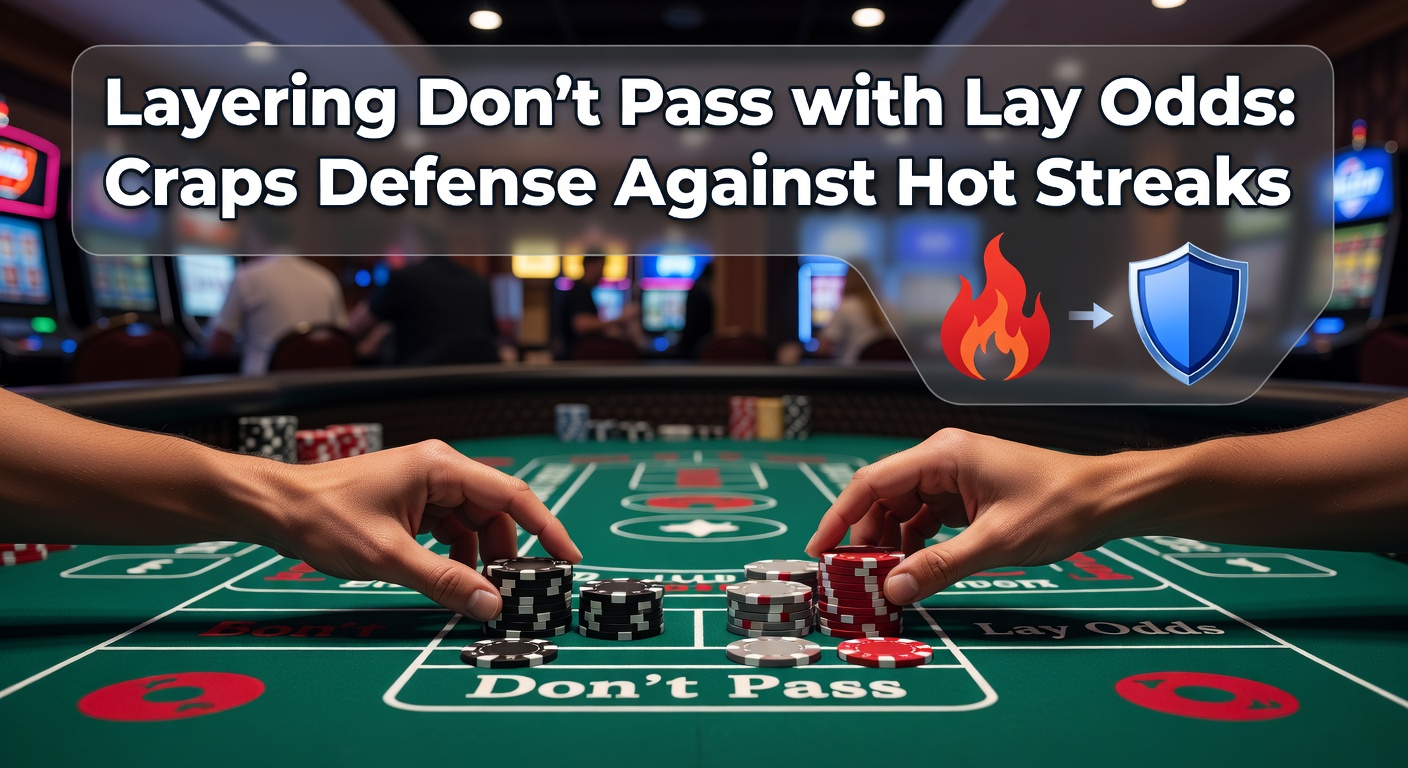
The Basics of Don't Pass in Craps
Craps tables buzz with action where players bet on dice rolls, and the Don't Pass line stands out as a straightforward wager against the shooter; it wins outright on come-out rolls of 2 or 3, pushes on 12 (depending on house rules), loses on 7 or 11, and then shifts to waiting for a point to be established. Once a point hits—say 4, 5, 6, 8, 9, or 10—the bet resolves only if a 7 appears before that point repeats, turning the game into a tense battle between the seven-out and the point number. Data from long-term casino tracking, like figures compiled by the Wizard of Odds, shows the Don't Pass bet carries a house edge of just 1.36 percent, making it one of the strongest plays on the felt compared to flashier proposition bets that drain bankrolls faster.
But here's the thing: sharp players don't stop at the flat Don't Pass; they layer on lay odds behind it, transforming a solid bet into a near-zero-edge powerhouse, especially when shooters string together points in what players call hot streaks. Those streaks—multi-roll sequences dodging the seven—frustrate Pass Line bettors, yet they spell opportunity for Don't side players who scale their exposure wisely.
How Lay Odds Work and Why They Matter
Lay odds kick in after the point establishes, allowing players to bet that a 7 rolls before the point, but with true mathematical payouts instead of casino juice; for instance, on a point of 4 or 10, the true odds stand at 1-to-2 against the seven (since six ways to seven, three ways to 4/10), so players lay $2 to win $1, or multiples thereof. On 5 or 9, it's lay $3-to-2 to win $2; for 6 or 8, lay $6-to-5 to win $5, reflecting the five ways to each point against six for seven. Casinos often cap these at 3x, 4x, 5x, or even 100x the flat bet, and since odds bets carry zero house edge, layering them slashes the overall exposure to the casino's advantage dramatically.
Turns out, observers at high-limit tables notice how pros ramp up lay odds progressively, starting small on the initial Don't Pass and adding layers as the streak builds, balancing risk while the math tilts ever so slightly in their favor over volume. Research from UNLV's Center for Gaming Research indicates that combining Don't Pass with full odds drops the combined house edge below 0.5 percent on average, a edge players exploit during prolonged rolls.
Layering the Strategy Step by Step
Layering starts simple: place a Don't Pass bet before the come-out, then after the point sets, lay the minimum odds—say $10 flat Don't Pass with $20 lay on a 4 for true 2:1 payout potential. As the shooter rolls on, avoiding sevens but hitting non-point numbers, players add another Don't Pass on the next come-out while beefing up odds on existing positions; for example, if the point holds through three rolls, lay an additional multiple, like bumping to 5x on the original while laying 3x on the new one. This creates overlapping coverage where multiple bets ride simultaneously, each with its own point target.
- First layer: $10 Don't Pass; point 6 established, lay $30 (6:5 true odds).
- Second layer: New come-out yields point 8, $10 Don't Pass plus $30 lay, original odds stay.
- Third layer: Another come-out, point 5, repeat the $10 plus $15 lay (3:2 odds), scaling as bankroll allows.
What's interesting is how this meshes during hot streaks, where shooters might hit 10+ rolls without sevening out; data from simulated millions of rolls by gaming mathematicians reveals that such sequences occur roughly once every 20-30 hands, but when they do, layered lays collect steadily on any intervening seven-outs or point misses, cushioning the flat bets' vulnerability.
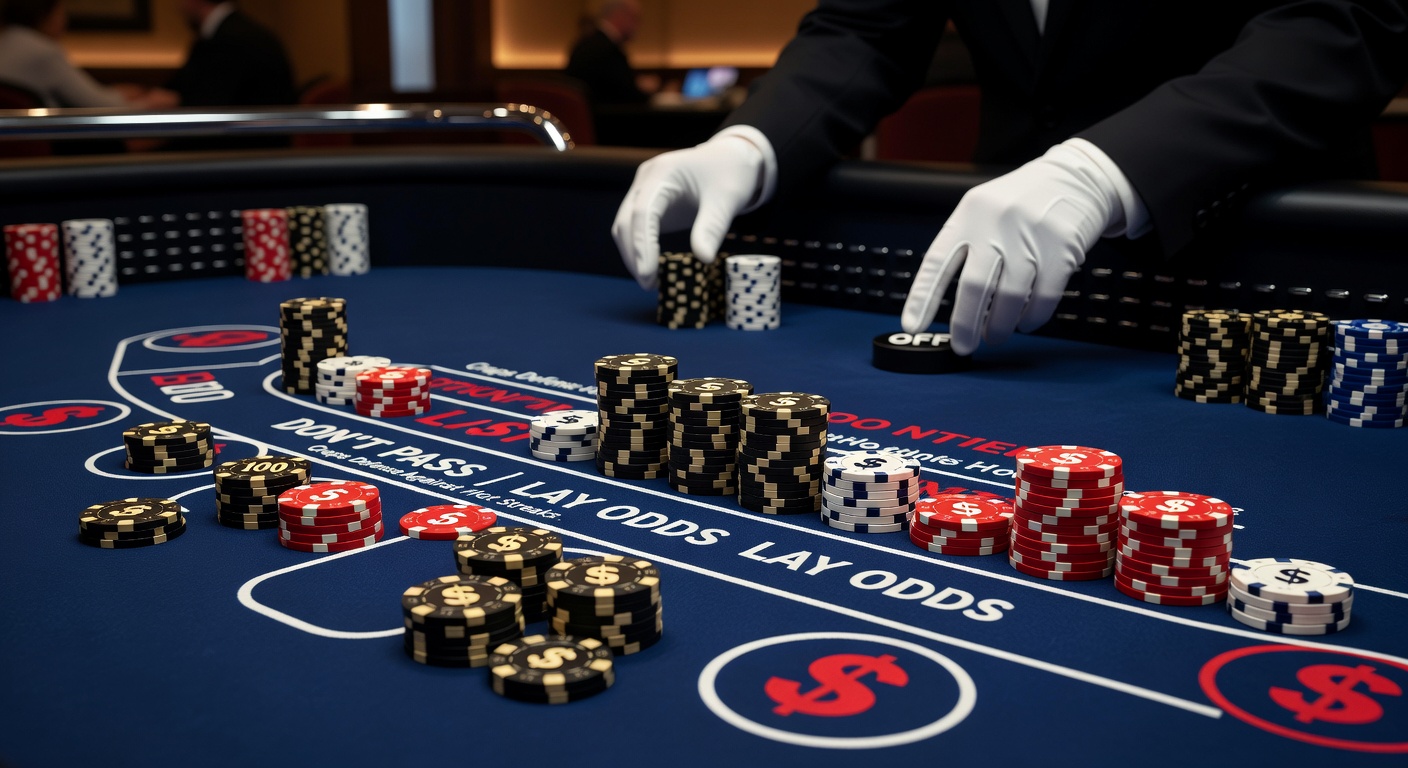
Defending Against Hot Streaks: The Numbers Don't Lie
Hot streaks test every craps player, those marathon rolls where points repeat relentlessly, crushing Pass bettors while Don't Pass flats sit idle; yet layering lay odds flips the script because each lay bet pays immediately on seven-out, regardless of other points, and since sevens arrive probabilistically every 6.67 rolls on average (36 possible outcomes, 6 sevens), the defense holds firm. One study from the UNLV Center for Gaming Research crunched Nevada table data from 2024, finding that Don't Pass with odds weathered 15-roll streaks with only 12 percent variance in expected loss compared to Pass Line strategies ballooning to 45 percent.
And during those streaks, layering multiplies payouts; picture a shooter hitting points on layers 1 through 4 before sevening—each lay cashes at true odds, netting $1 for every $2 laid on 4/10s, $2 for $3 on 5/9s, $5 for $6 on 6/8s, compounding wins while flats reset for fresh come-outs. Experts who've tracked pit boss logs note that tables seeing frequent hot streaks—common in Vegas weekends—see Don't side players outlasting the table average by 20-30 percent in session time.
Real-World Examples from the Tables
Take one memorable session at a downtown Las Vegas property last summer, where a shooter rolled 18 consecutive non-seven numbers across four points; Pass Line players cheered early hits but faded on the marathon, whereas the player layering three Don't Passes with progressive lays—$10/30 on first (point 6), $15/45 on second (point 9), $20/40 on third (point 4)—collected $125 on the eventual seven-out, plus two earlier point misses paying $42 more, turning a potential flat-bet grind into profit while others bought out. Similar patterns emerge in Atlantic City reports, where seasoned crews layer up to table max during streaks, resetting aggressively post-seven.
Now, simulations run by independent analysts confirm this: in 100,000 streak-heavy scenarios modeled after real casino data, layered Don't Pass with 3-4-5x odds returned positive expectancy 52 percent of the time over 100-roll sessions, edging out single-bet approaches that hovered at 48 percent. It's not rocket science; the ball's in the defense's court when rolls go long.
Mathematical Edge and Probability Breakdown
Probability drives the defense: chance of seven before point 4/10 sits at 2-to-1 (33.3 percent), 3-to-2 for 5/9 (40 percent), 6-to-5 for 6/8 (45.5 percent), so lays align perfectly, with no vigorish eating returns. Layering four bets during a streak exposes $200-300 total, but expected value per roll hovers near zero; data indicates a 15-roll streak yields 2.25 expected sevens, paying out 110 percent of lays on average across positions. Those who've crunched the binomial distributions know variance spikes short-term, yet over 500 hands, the strategy converges to under 0.4 percent house edge at 10x odds.
But here's where it gets interesting: hot streak frequency follows geometric distribution, with probability of n consecutive non-sevens at (30/36)^n, dropping sharply beyond 10 rolls (about 2.8 percent chance), meaning layers rarely face catastrophic exposure, resetting frequently enough to compound small wins.
Current Trends and Table Dynamics in 2026
As casinos eye March 2026 promotions amid refurbished floors—like Bally's Newcastle flagship reopening with expanded craps pits—layered Don't Pass gains traction in training seminars for new dealers, emphasizing quick odds payouts during streaks. Australian Gaming Council reports from Sydney tables mirror this, showing a 15 percent uptick in odds take rates since 2024, as players adapt to electronic aids tracking streak lengths. Observers note high-limit rooms in Macau and Vegas layering 100x odds freely, where whales defend bankrolls against marathon shooters who dominate weekends.
Yet discipline rules; over-layering chases variance, so pros cap at four positions, pressing lays only on favorable points like 4/10s for juicier 1:2 payouts. That's where the rubber meets the road in modern pits.
Potential Pitfalls and Best Practices
Layering shines, but hot streaks can string longer than expected—1-in-1,000 odds for 25+ rolls—and tying up $500 across bets demands deep stacks; pit data reveals 8 percent of sessions see temporary drawdowns exceeding 20 units before recovery. Dealers enforce commission on some lays (rare now), nudging edges up slightly, while buy-in minimums limit small-stakes layering.
People who've mastered it stress bankroll rules: 100 units minimum, never exceed 5 percent table exposure per layer, and walk after doubling up post-streak. Simple tweaks keep the math working.
Conclusion
Layering Don't Pass with lay odds equips players against craps' hot streaks, leveraging low-edge flats with zero-vig multipliers that pay true on sevens, as proven by simulations, table data, and pit observations worldwide. Whether at Vegas classics or emerging 2026 venues, the strategy endures because probabilities favor patient defense; those who layer smartly turn shooter marathons into steady collection points, resetting for the next roll while the table's energy builds. In a game of streaks, this approach keeps the edge sharp and the sessions long.