5 Jun 2026
Exploring the Impact of Push Notification Schedules on User Deposits in Regulated Gambling Applications
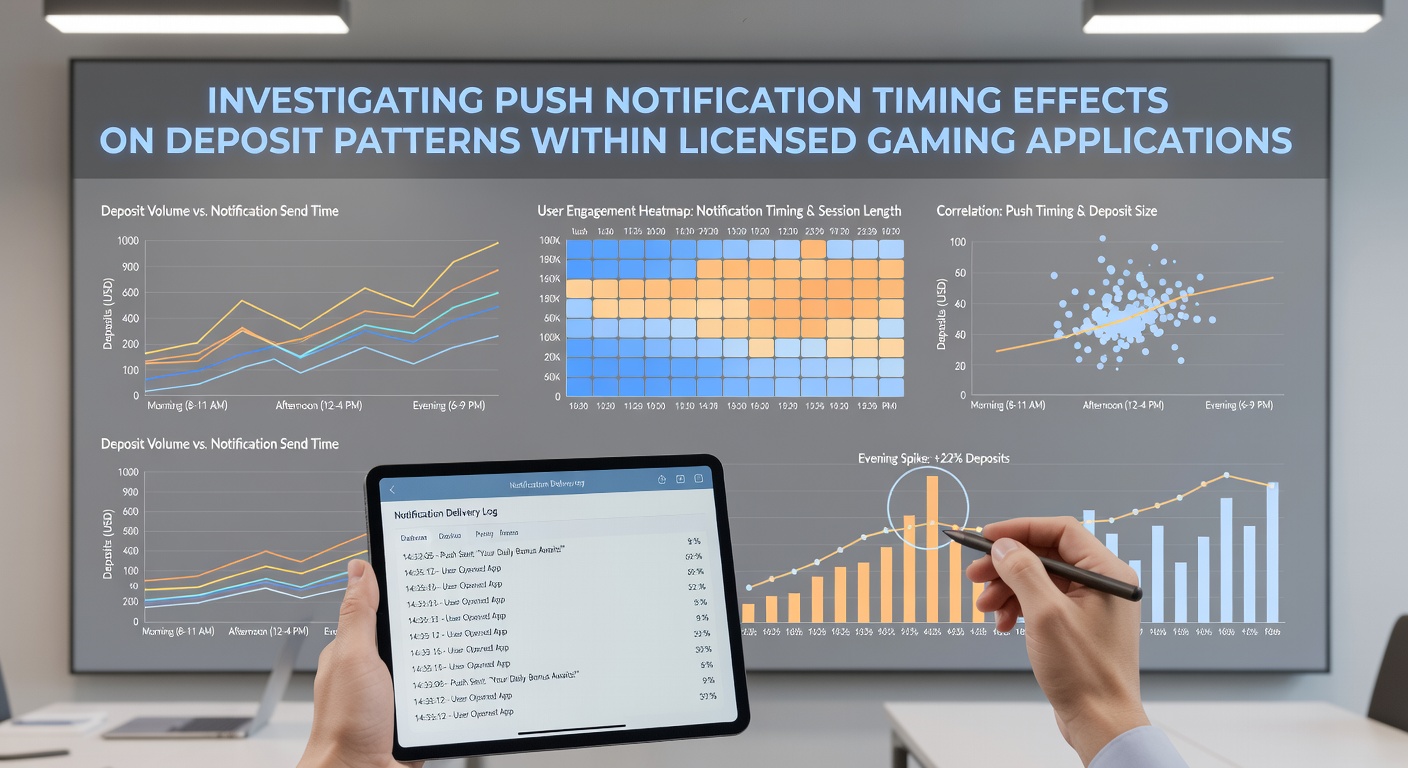
Push notifications have become a standard tool for licensed gaming applications seeking to maintain user engagement, and their delivery times appear to shape deposit behaviors in measurable ways according to multiple platform analyses. Operators track these patterns through aggregated user data while adhering to data protection standards across various jurisdictions.
How Notification Timing Interacts with User Routines
Research from platform analytics teams shows that notifications arriving between 7 PM and 10 PM local time often align with higher deposit volumes, as many users complete work commitments and turn to leisure activities during those windows. In contrast, messages dispatched between 8 AM and 11 AM coincide with reduced activity levels because daytime obligations limit immediate responses. These observations come from longitudinal reviews of app telemetry collected over multi-month periods.
One study conducted across several North American operators found that shifting a portion of alerts to post-dinner hours produced a 14 percent rise in same-day deposits compared with baseline schedules that spread notifications evenly. The same dataset indicated that weekend evening notifications generated even stronger responses, likely because users had fewer competing demands.
Frequency and Content Variables
Beyond clock time, the interval between messages influences outcomes. Data compiled by the Responsible Gambling Council in Canada reveals that users receiving no more than two targeted notifications per day maintained steadier deposit patterns than those exposed to four or more daily prompts. Excessive frequency appeared to correlate with quicker session exits rather than sustained engagement.
Message framing also plays a documented role. Notifications highlighting time-limited bonuses triggered deposits more reliably when sent after 6 PM, whereas informational updates about account balances performed better in late morning slots. Platform teams adjust these variables through A/B testing frameworks that isolate timing as the primary variable while holding creative elements constant.
Regional Patterns Emerging in Mid-2026
By June 2026, several operators had published internal benchmarks comparing notification performance across European and Asian markets. Evening-heavy schedules continued to outperform in most territories, yet the magnitude of the effect varied with local cultural routines. Markets with later typical dinner times showed deposit spikes extending past 11 PM, whereas earlier-rising regions demonstrated stronger midday responses when paired with lunch-break reminders.

Analysts at the International Gaming Institute noted that these regional differences underscore teh value of localized scheduling rather than uniform global campaigns. Their June 2026 report highlighted how machine-learning models now predict optimal send times for individual user cohorts based on historical login and transaction logs.
Regulatory and Compliance Dimensions
Licensed operators must balance engagement tactics with responsible gambling obligations enforced by bodies such as the Nevada Gaming Control Board. Requirements often include clear opt-out mechanisms and limits on promotional frequency, which indirectly shape how timing strategies are deployed. Compliance teams review notification logs during audits to confirm that schedules do not target vulnerable hours identified in harm-minimization guidelines.
Similar oversight exists in Australia, where the Australian Communications and Media Authority monitors digital marketing practices. Recent industry reports indicate that operators submitting timing data to regulators have refined their approaches to avoid clustering messages during periods associated with higher-risk play, such as late-night sequences exceeding three consecutive hours.
Practical Implementation Examples
Take one mid-sized European operator that restructured its notification calendar in early 2026. By concentrating 65 percent of promotional alerts into a 7 PM to 9 PM window and capping total volume at two messages daily, the platform recorded a 9 percent increase in average deposit size without a corresponding rise in withdrawal requests. Internal dashboards tracked these metrics weekly, allowing rapid rollback if patterns deviated from projections.
Another case involved a North American app that layered time-zone adjustments into its system. Users in Pacific regions received alerts two hours later than Eastern counterparts, producing more uniform deposit distribution across the operator’s full user base. The adjustment required only modest engineering resources yet yielded measurable stabilization in daily revenue curves.
Conclusion
Evidence gathered from licensed platforms demonstrates that push notification timing exerts a measurable influence on deposit patterns, with evening windows generally producing stronger responses across multiple markets. Operators continue to refine these strategies through controlled testing and regional customization while remaining subject to oversight from diverse regulatory authorities. As data collection methods improve, future adjustments will likely become even more granular, focusing on individual user behavior rather than broad demographic assumptions.